Your domain name is far more than just a web address — it's the cornerstone of your digital identity. It's the first thing potential customers see, the foundation of your brand's online presence, and often the deciding factor in whether someone remembers your business or forgets it entirely. A well-chosen domain name builds trust, reinforces your brand, and makes it easy for people to find and return to your website.
Yet despite its importance, many business owners rush through the domain selection process, settling for whatever's available without giving it the strategic thought it deserves. Whether you're launching a new business, building a personal brand, or starting a side project, taking the time to choose the right domain will pay dividends for years to come.
Here are seven proven tips to help you choose a domain name that's effective, memorable, and built for long-term success.
1. Keep It Short and Simple
The best domain names are short, easy to type, and effortless to remember. Aim for a domain that is between 6 and 15 characters in length — long enough to be descriptive, but short enough that people can recall it after hearing it just once.
Short domain names are easier to share verbally, less prone to typos, and look cleaner on business cards, social media profiles, and marketing materials. Think about some of the most successful brands online: Google, Amazon, Stripe, Slack — all are short, punchy, and instantly memorable.
Avoid overly long domain names that try to stuff in too many words. A domain like best-affordable-web-design-services-malaysia.com might sound descriptive, but it's almost impossible to remember, awkward to share, and looks unprofessional. Instead, focus on brevity and clarity.
2. Use Keywords That Reflect Your Business
While you don't want to stuff your domain with keywords, incorporating one or two relevant terms can immediately communicate what your business does. A domain that hints at your industry, service, or niche gives visitors an instant understanding of what to expect when they arrive at your site.
For example, if you run a web design agency, a domain like pixelcraft.com or webstudio.my immediately signals your industry. If you're a local bakery, something like freshbakes.com connects your domain to your product.
That said, don't sacrifice brandability for keywords. A domain packed with generic keywords can feel spammy and forgettable. The sweet spot is a name that subtly suggests your business while still feeling unique and brandable.
3. Choose the Right Domain Extension
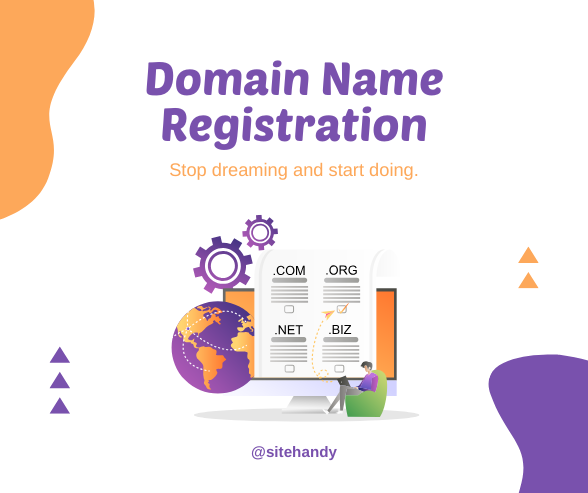
The domain extension (also called a top-level domain or TLD) is the suffix at the end of your web address. While there are now hundreds of extensions available, your choice of TLD sends a signal about your brand and can affect how people perceive your website.
- .com — The gold standard. If the .com version of your desired domain is available, grab it. It's the most recognized and trusted extension worldwide, and most people will default to typing ".com" when visiting a website.
- .my — The country-code TLD for Malaysia. If your business primarily serves a Malaysian audience, a .my domain signals local presence and can boost trust with local customers. Extensions like .com.my are also popular for commercial entities.
- .net — Originally intended for network-related businesses, .net has become a widely accepted alternative when .com isn't available. It's professional and familiar to most internet users.
- .io — Popular among technology companies, startups, and SaaS businesses. The .io extension has become synonymous with innovation and tech, making it a strong choice for software products and developer-focused brands.
Other extensions like .co, .org, .tech, and .store also have their place depending on your industry and audience. However, if you're unsure, .com remains the safest and most universally recognized choice.
4. Make It Brandable
A brandable domain name is one that feels unique, sounds good when spoken aloud, and looks clean when written. It should evoke a feeling or identity that's distinctly yours — not something that could belong to any generic business in your industry.
To keep your domain brandable, follow these guidelines:
- Avoid hyphens — Hyphens make domains harder to remember and more awkward to share verbally. When you tell someone "visit my-awesome-site-dot-com," the hyphens create confusion and increase the chance they'll land on a competitor's site without them.
- Avoid numbers — Unless a number is a core part of your brand name (like 7-Eleven), numbers in domain names create ambiguity. People won't know whether to type "5" or "five," leading to lost traffic.
- Avoid double letters — Domains where two letters repeat at the junction of words (like "pressstart.com") can cause confusion about spelling.
- Say it out loud — Read your domain name aloud multiple times. If it's easy to say, easy to spell after hearing it, and doesn't require explanation, you've likely found a good one.
5. Check Availability Across Platforms
Your domain name should ideally match your presence across all digital platforms. Before committing to a domain, check whether the same name (or a close variation) is available as a username on major social media platforms like Facebook, Instagram, Twitter (X), LinkedIn, and TikTok.
Consistency across platforms is crucial for brand recognition. When your website, social media handles, and email addresses all use the same name, it reinforces your brand and makes it easier for customers to find you, regardless of where they're looking.
If your preferred domain is available but the matching social media handles are taken, consider whether the discrepancy will cause confusion. In some cases, it's worth choosing a slightly different domain that allows full consistency across your entire digital footprint.
6. Protect Your Brand
Once you've found the perfect domain name, don't stop at registering just one version. Savvy brand owners protect their digital identity by registering similar variations of their primary domain.
Consider registering:
- Multiple extensions — If your primary domain is yourbrand.com, also register yourbrand.net, yourbrand.my, and any other relevant TLDs to prevent competitors or domain squatters from using them.
- Common misspellings — If your brand name is commonly misspelled, register those misspelled versions and redirect them to your main domain.
- Variations with and without hyphens — If your domain contains multiple words, someone might try adding hyphens between them.
These additional registrations are relatively inexpensive and serve as insurance against brand confusion, traffic loss, and potential impersonation. You can set them all to redirect to your primary website, ensuring that no matter which variation someone types, they end up in the right place.
7. Think Long-Term
Your domain name should grow with you. One of the most common mistakes business owners make is choosing a domain that's too narrow, too specific to a current product or trend, or tied to a location they might outgrow.
For example, if you're a web developer based in Seremban, a domain like serembanwebdesign.com might seem logical today. But what happens when you expand your services to Kuala Lumpur, or start offering mobile app development? Suddenly, your domain feels limiting and doesn't reflect the full scope of your business.
Instead, choose a name that's broad enough to accommodate future growth while still being relevant to your core identity. Think about where you want your business to be in five or ten years, and make sure your domain can still represent it accurately at that point.
Similarly, avoid referencing current trends, technologies, or buzzwords that might become dated. A domain name is a long-term investment — treat it like one.
Conclusion
Your domain name is the cornerstone of your digital identity. It's the first impression visitors have of your brand, the anchor of your online marketing efforts, and a critical factor in how people discover, remember, and trust your business.
By keeping it short and simple, incorporating relevant keywords, choosing the right extension, making it brandable, ensuring cross-platform availability, protecting your brand with multiple registrations, and thinking long-term, you'll set yourself up with a domain name that serves your business well for years to come.
Take your time with this decision. Brainstorm multiple options, test them with friends and colleagues, sleep on it, and don't settle until you find a name that feels right. Your future self — and your future customers — will thank you.
Need help finding and registering the perfect domain? Contact our team at Sitehandy — we offer domain registration services and can help you secure the right name for your brand.
Back to Blog